The Power of Choice: Who actually makes decisions within education?
Why Autonomy Is the Cornerstone of Thriving Learning Communities
In learning spaces around the world, a quiet revolution is taking place. It’s not marked by protests or policy changes, but by something far more subtle and powerful: the sound of individuals making their own choices about learning. When we give learners the autonomy to shape their educational journey, we don’t just improve individual outcomes—we transform entire learning communities into vibrant ecosystems of growth, collaboration, and innovation.
Beyond Compliance
Traditional education often operates on a compliance model: following instructions, completing assignments, and demonstrating mastery through standardized measures. While structure has its place, this approach can create passivity – learners who wait to be told what to do next. Which, coincidentally, is the beginning of Learned Helplessness
Real learning, however, is an active, personal process that thrives when individuals have agency over their own experiences.
Authentic autonomy means giving both learners and facilitators meaningful choices about what they study, how they learn, how they guide, and how they demonstrate understanding. It’s about recognizing that each person brings unique perspectives, interests, and strengths to the learning community—and that these differences are not obstacles to overcome, but assets to be leveraged. It is a true democracy of both learning and respect.
The Ripple Effect of Empowerment
When individuals have autonomy, something remarkable happens they become invested in their own methods in ways that no external motivation can match. This investment creates a ripple effect throughout the entire learning community.
This ripple effect can be seen in learners and facilitators alike. Tasks aren’t just completed – they are pursued, engulfed, digested, and concluded with wisdom and passion. In turn, creating steppingstones along the self-actualization process; creating channels of confidence, flexible thinking, problem solving, and perspective analysis.
Life Skills & Leadership
Autonomy does more than improve academic outcomes—it develops the critical life skills that learners will need long after they leave the classroom. When there’s practice of making choices about learning, individuals develop:
- Critical thinking skills as they evaluate options and make decisions
- Self-regulation as they manage their time and resources
- Problem-solving abilities as they navigate challenges they’ve chosen to tackle
- Leadership skills as they take initiative and guide their own learning journey
Despite popular educational belief – these life skills are crafted and mastered over time. These are not skills one is born containing. Considering foundational communication categories such as the ICDL DIRFloortime Functional Emotional Developmental Capacities – each communication level works on honing into these critical life skills at developmentally appropriate times.
These skills don’t develop in isolation. As students practice autonomy, they model these behaviors for their peers, creating a community culture that values independence, critical thinking, and personal responsibility.
A Teacher’s Evolution: From Controlling to Contributing
Embracing autonomy requires educators to reimagine their role. Instead of being a sole source of knowledge and direction, teachers become facilitators, coaches, and co-learners. This shift can feel challenging, but it’s also incredibly rewarding.
When educators step back from controlling every aspect of the learning process, they create space for individuals to step forward. They can focus on asking essential questions, providing resources, and helping learners reflect on their journey. The classroom becomes a place of discovery rather than delivery.
Creating Conditions for Success: Designing for Autonomy
Autonomy doesn’t mean abandoning structure or lowering expectations; it doesn’t mean abandoning traditionalism. Instead, it requires thoughtful design of learning environments that support choice within a framework of clear goals and expectations.
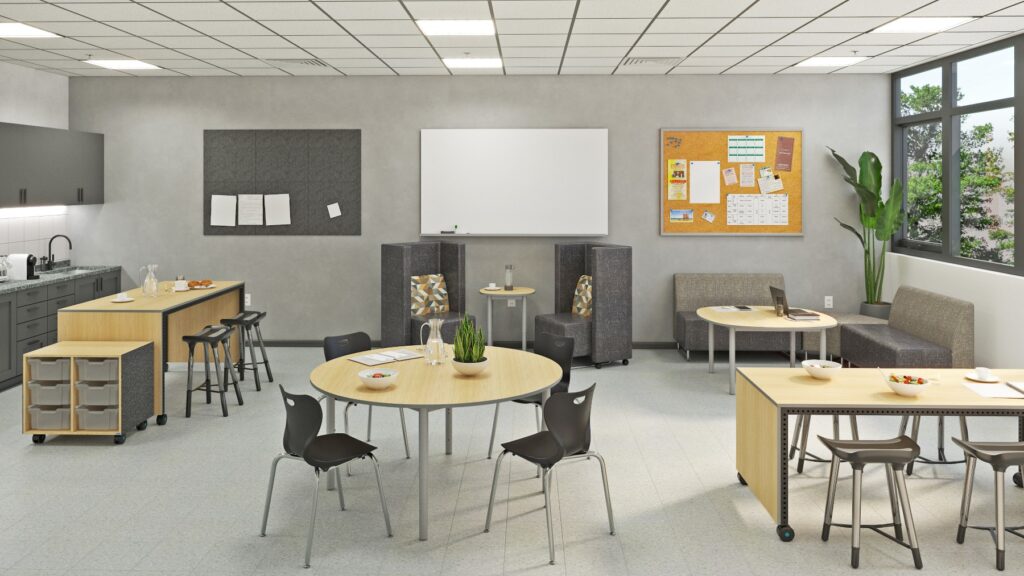
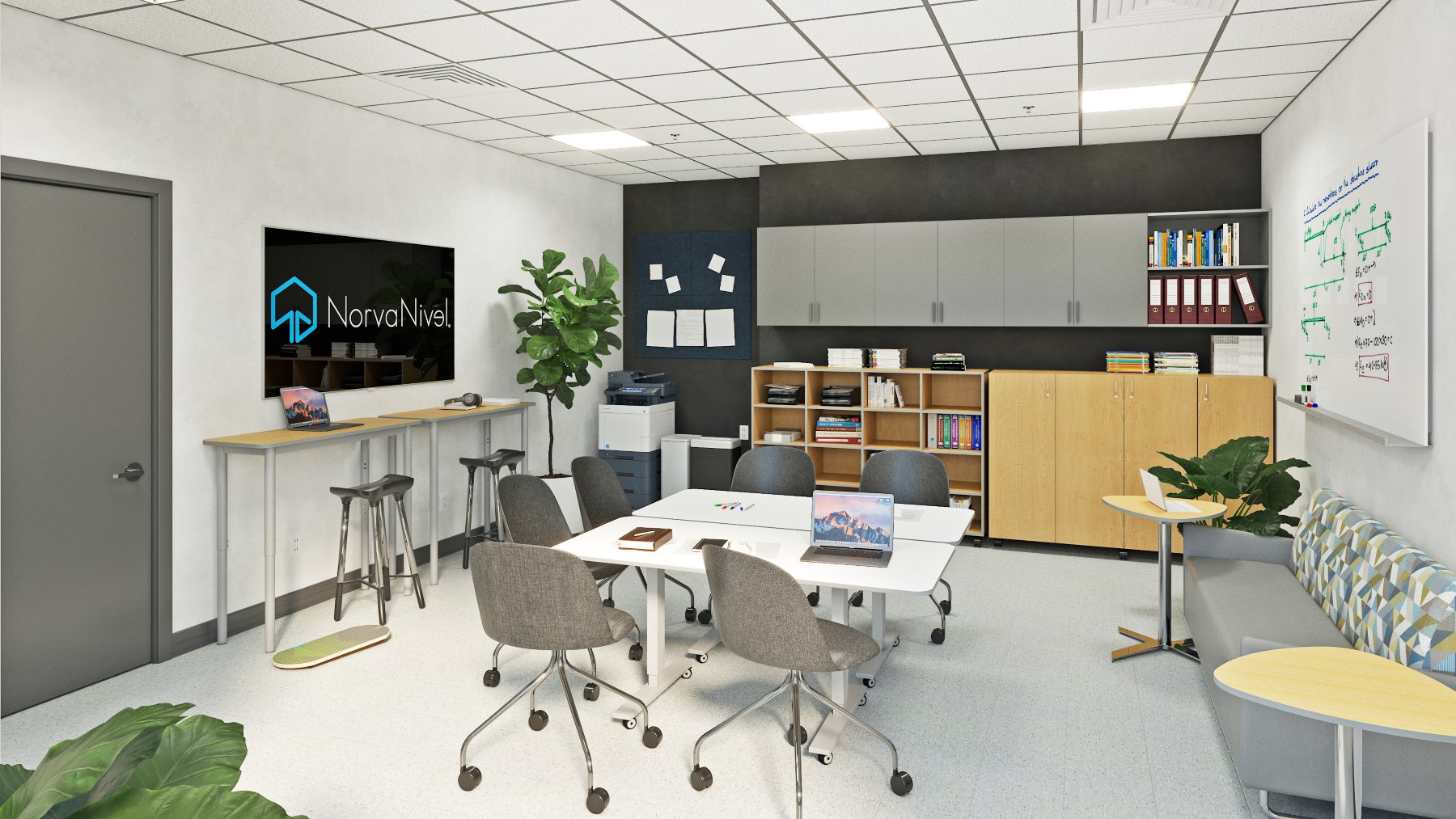
One often overlooked aspect of autonomy is the power of physical space. When individuals can rearrange work surfaces, have preferential seating, create collaborative areas that match their current task, or diversify heights, they develop a deeper sense of ownership over their environment.
The ability to modify physical surroundings shows learners they have agency not just over what they learn, but how and where they learn it.
Successful autonomous learning communities typically feature:
- Clear learning objectives that individuals can pursue through multiple pathways
- Rich physical resources that support diverse interests and learning styles – symmetrical & bilateral motion, acoustic variances, lighting variances, textural input/output
- Flexible physical environments where learners can rearrange furniture and spaces to match their learning needs – without the assistance of an adult
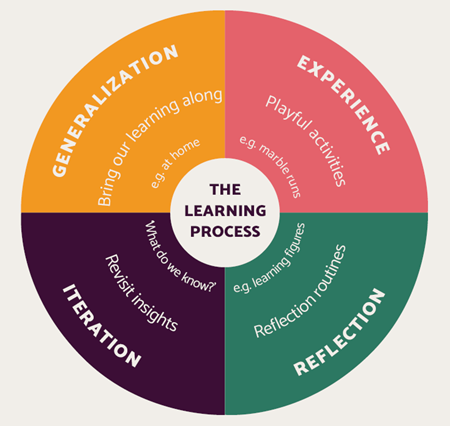
- Regular reflection opportunities that help learners and facilitators assess their progress and adjust their approach
- Celebration of diverse achievements that validates different ways of demonstrating learning – for both learners and facilitators
Designs that Elevate Autonomy
When design meets pedagogy, it makes the job of a facilitator more palpable. On a given day, a facilitator prepares for 5-8 content blocks; meaning one could experience 5-8 different types of activities in 1 day. Learners in elementary school spend the majority of the day in 1-3 environments. Understanding this showcases how the design of an environment can support or prohibit experiential learning.
The following are foundational designs that mirror popular pedagogical practices:
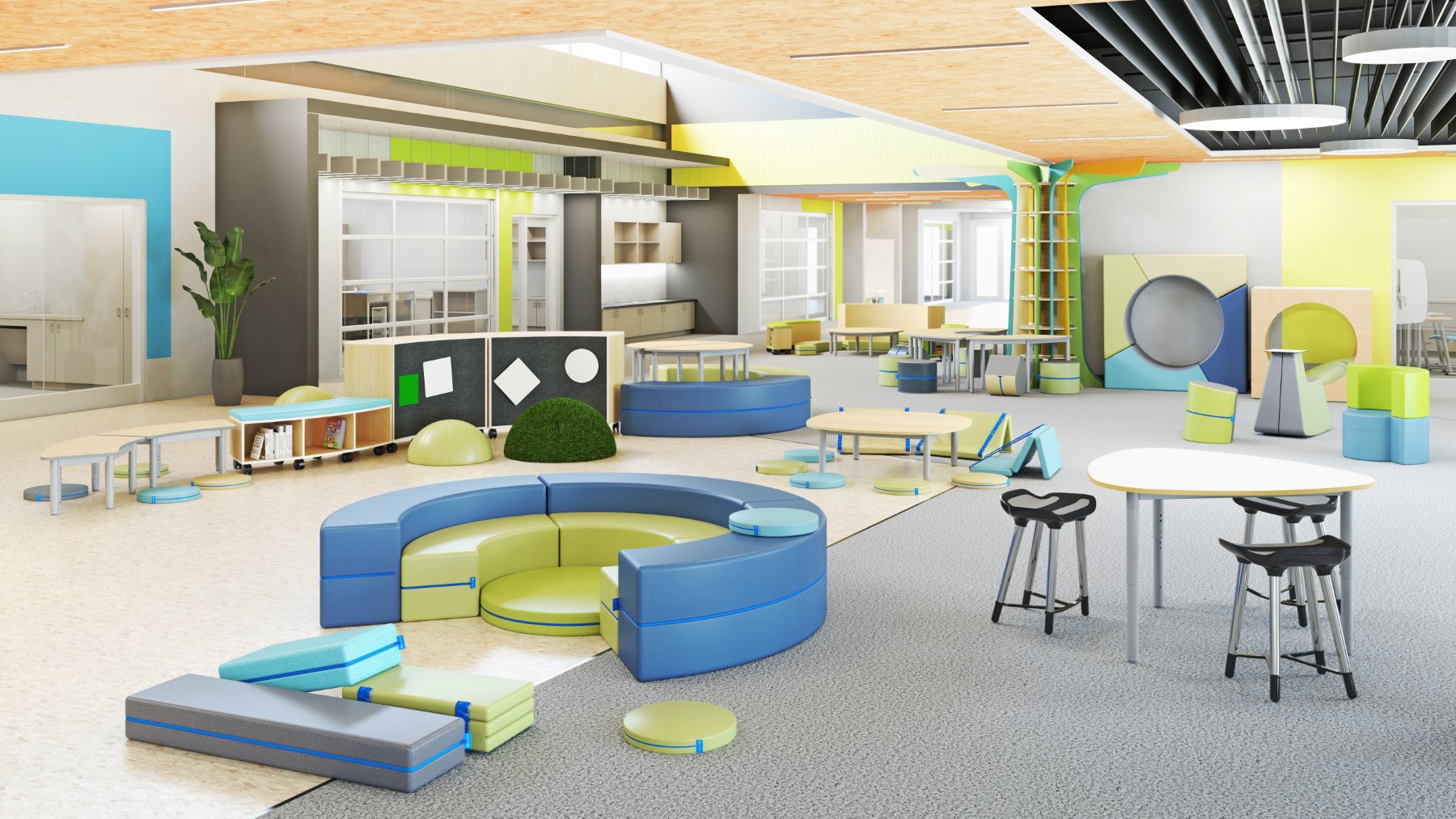
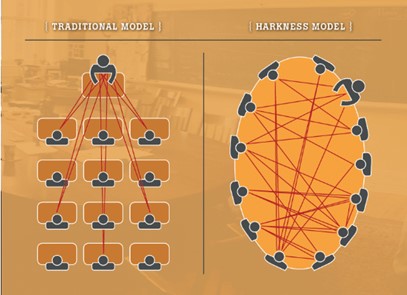
- Collaboration Stations – Circular tiered work surfaces and seating which allows for authentic conversation, presentation, and seminar. This design focal point supports methodologies such as Harkness Method, Socratic Circles, Circular Learning Model, ‘Circle Time’ etc.
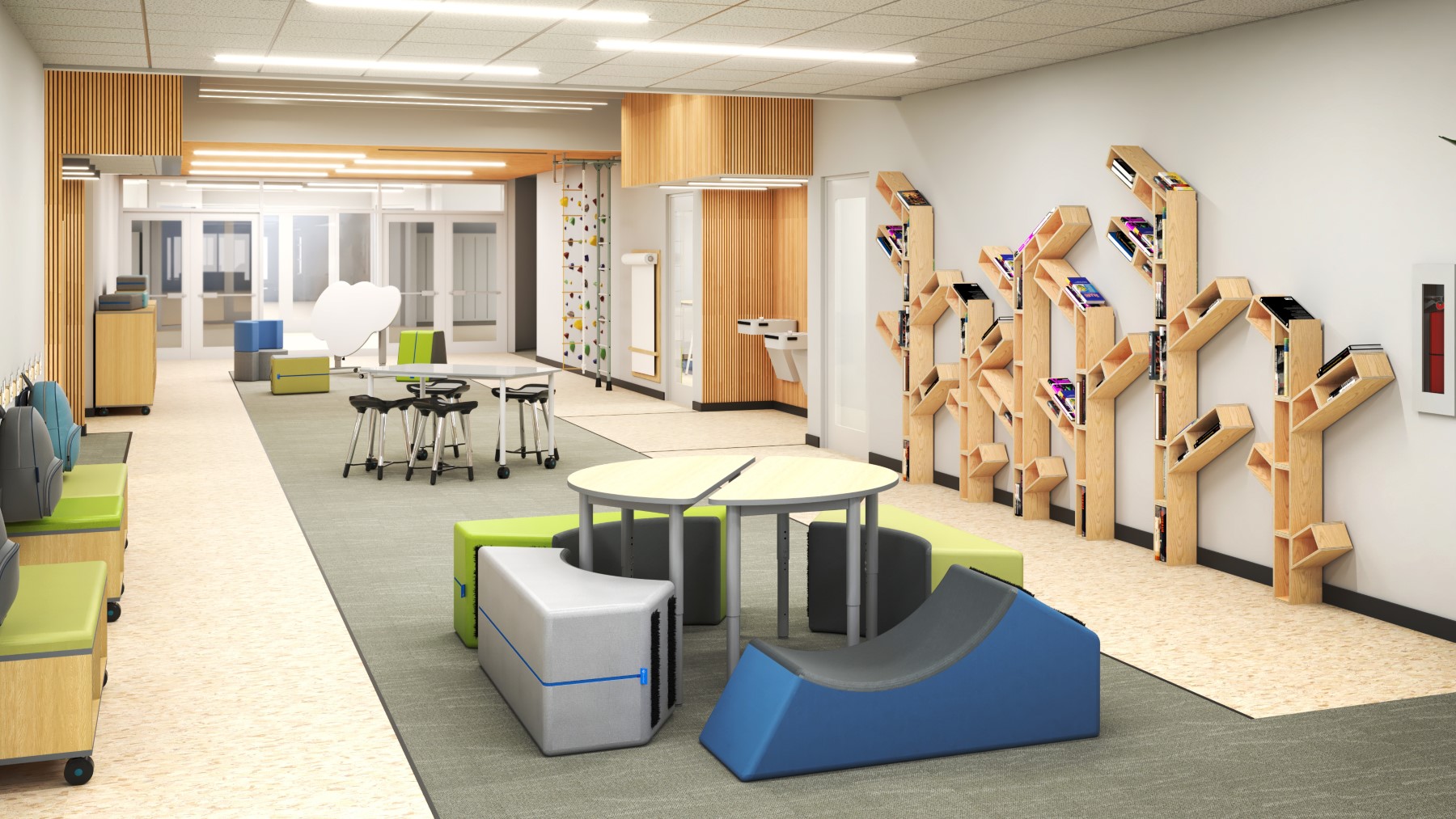
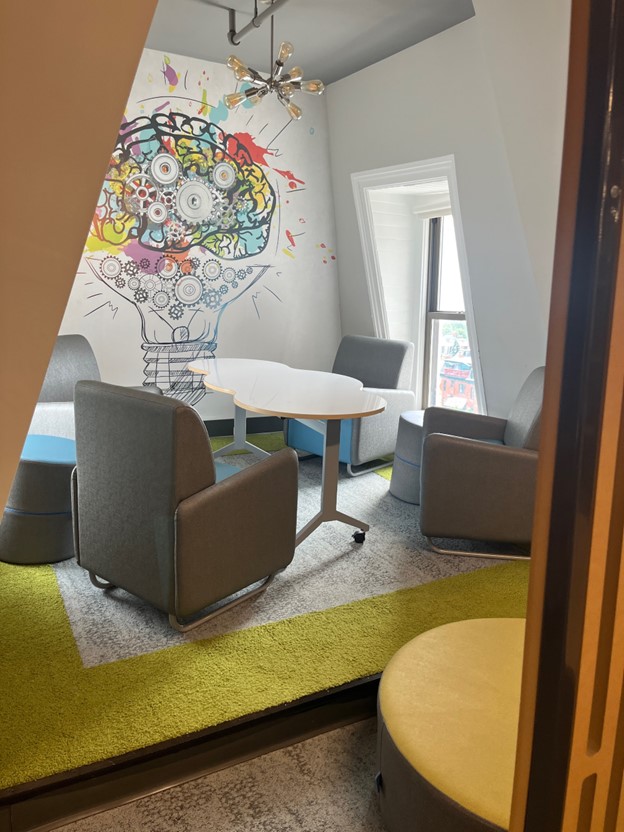
- Reflect & Respond – Each learning space must incorporate aspects of self-reflection into its design. Sections of preferential seating, non-linear edges, coves and compartments where learners can enter into a time of reflection and understanding. Partnered with textural input/output, acoustic integration, and alternative lighting – these learning space cavities support learning ideologies such as the reading zone. Allowing learners to get “lost in a book”.

- Small Groups Throughout – Utilizing each inch of a learning space gives more opportunity for small group work. Piecing together mobile storage, acoustic material, variations in casegood height, makes room for groups of 3-6 learners to work separately without interruptions of other groups.
The Physical Space as A Second Teacher
One often overlooked aspect of educational autonomy is the power of physical space. When individuals can rearrange desks, choose where to sit, or create collaborative areas that match their current task, they develop a deeper sense of ownership over their learning environment. The ability to modify their physical surroundings teaches them they have agency not just over what they learn, but how and where they learn it.
Consider the difference between a classroom with fixed rows of desks versus one with moveable furniture that individuals can configure for small group work, independent study, or large group discussions. In the flexible environment, people learn to assess what kind of space they need for different tasks and take responsibility for creating it. They might push tables together for a collaborative project, find a quiet corner for focused reading, or arrange chairs in a circle for peer feedback sessions.
This spatial autonomy also supports diverse learning preferences and needs. Some learners focus better standing at high tables, others prefer floor seating, and still others need the structure of a traditional desk setup. When individuals can make these choices themselves, they become more attuned to their own learning preferences and more skilled at advocating for what they need to succeed.
Moreover, learner control over physical space creates a more inclusive learning community. When learners with different physical needs, learning styles, and cultural backgrounds can all find ways to arrange the space that works for them, the classroom becomes truly accessible to everyone. This physical agency translates into intellectual and social agency, as individuals who feel comfortable in their physical environment are more likely to contribute their ideas and take academic risks.
Aiding a Community
Perhaps most importantly, a learning community’s autonomy strengthens the community as a whole. When learners and facilitators are empowered to make choices about their guidance and learning, they develop a sense of shared ownership over the culture in a space. They become stakeholders in each other’s success, offering support, sharing resources, and celebrating diverse achievements.
This sense of community contributes to a positive feedback loop. Individuals who feel valued and heard are more likely to add positively to the environment around them – whether that’s school, home, a park, the grocery store etc. They’re more willing to take intellectual risks, share their thinking, and support their peers’ learning journeys.
22nd Century Learning Space Design
As admin, instructional staff, learners, and families prepare for an uncertain and rapidly changing world, the ability to be self-directed, adaptable, and autonomous becomes increasingly crucial. The jobs of the future will require workers who can identify problems, seek out resources, and take initiative. The citizens of tomorrow will need to think critically, make informed decisions, and collaborate effectively with diverse groups.
By embracing autonomy for both kids and adults in our educational organizations, we’re not just improving education—we’re cultivating the leaders, innovators, and engaged citizens our world desperately needs.
The Choice Is Ours
Every educator, administrator, and community member has the opportunity to champion student autonomy. It might start small—offering students choice in how they demonstrate their learning, or inviting them to help design classroom norms. But these small steps can lead to transform.