
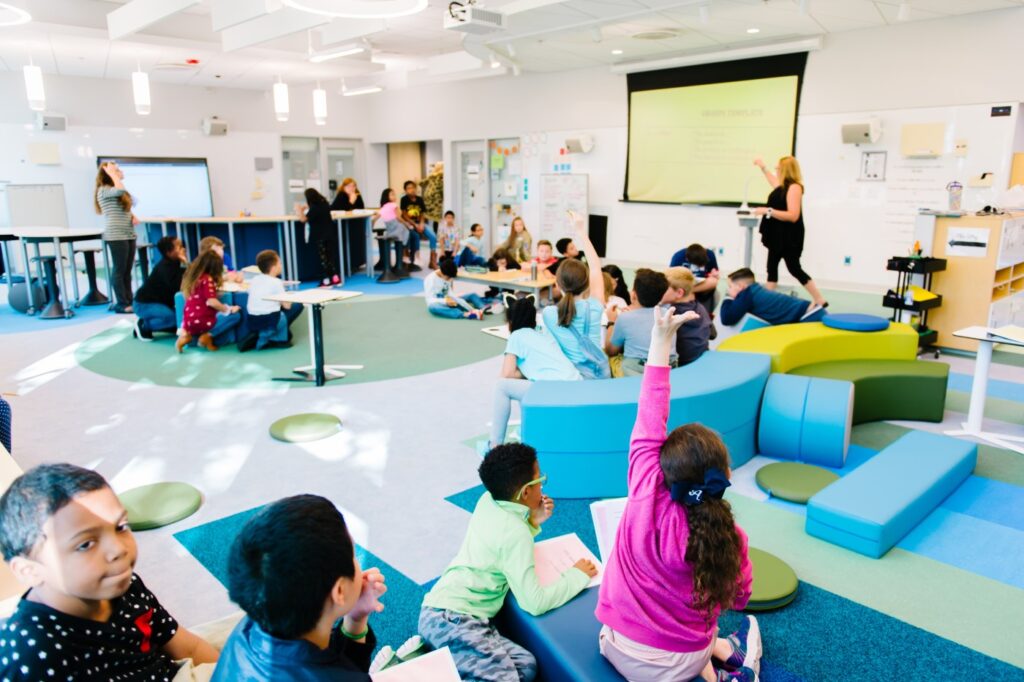
Too often, learning spaces are designed and compartmentalized based on generic perception of what education is rather than what it can or should be. Environments are discussed over draft tables, revised in back rooms, presented on conference tables, and actualized before instructional staff or learning community members can ask questions or give feedback.
And to some extent, that makes sense… When you start involving the community, there are ‘too many cooks in the kitchen’.
Don’t Overlook the Cooks
Well, it sounds like whoever came up with that process never made applesauce with 27 kindergarteners after reading Johnny Appleseed. Or had a pie party with 29 second graders after experiencing a holiday with Charlie Brown. Or lived through countless years of high school Home-Ec.
What do these experiences have to do with a heutagogical approach to educational design?
Everything.
The beauty of making applesauce with 27 kindergarteners is witnessing each cook get an opportunity to watch, prepare, imitate, conquer, experience, and reflect – which is essentially, the learning process. And how does one achieve skill mastery? Through an authentic experiential learning process.
Educators are often mislabeled as controlling or too ‘specific’. In reality, there are limited factors an educator actually ‘controls’. 99% of an educator’s job is taking what they’ve been given, and translating that to others. But the idea of ‘choice’ for an educator can be difficult – as most educators do not experience choice themselves… in curriculum, materials, daily schedule, content structure, deliverables etc.

Self-Determined Educators
What is an educator’s role within a heutagogical environment? How can educators be empowered in heutagogical spaces?
When educators first encounter heutagogy—the practice of self-determined learning—a common concern emerges: “If individuals are directing their own learning, what’s my role?” It’s an understandable question. After all, if we’re shifting control to learners, does that diminish the teacher’s importance?
The answer is a resounding no. The teacher’s role doesn’t disappear in heutagogical education—it transforms. And in many ways, becomes even more critical.
Not Less Important
In traditional pedagogical models, educators are the primary source of knowledge, the directors of learning activities, and the judges of whether learning has occurred. They stand at the center, controlling the flow of information and the pace of progress.
In heutagogical models, educators step back from the center but not from the work. They become architects of learning environments, facilitators of discovery, and coaches who help learners develop the metacognitive skills essential for self-direction. This shift requires different skills, not fewer skills—and it demands deep pedagogical expertise.

The Teacher as Environmental Designer
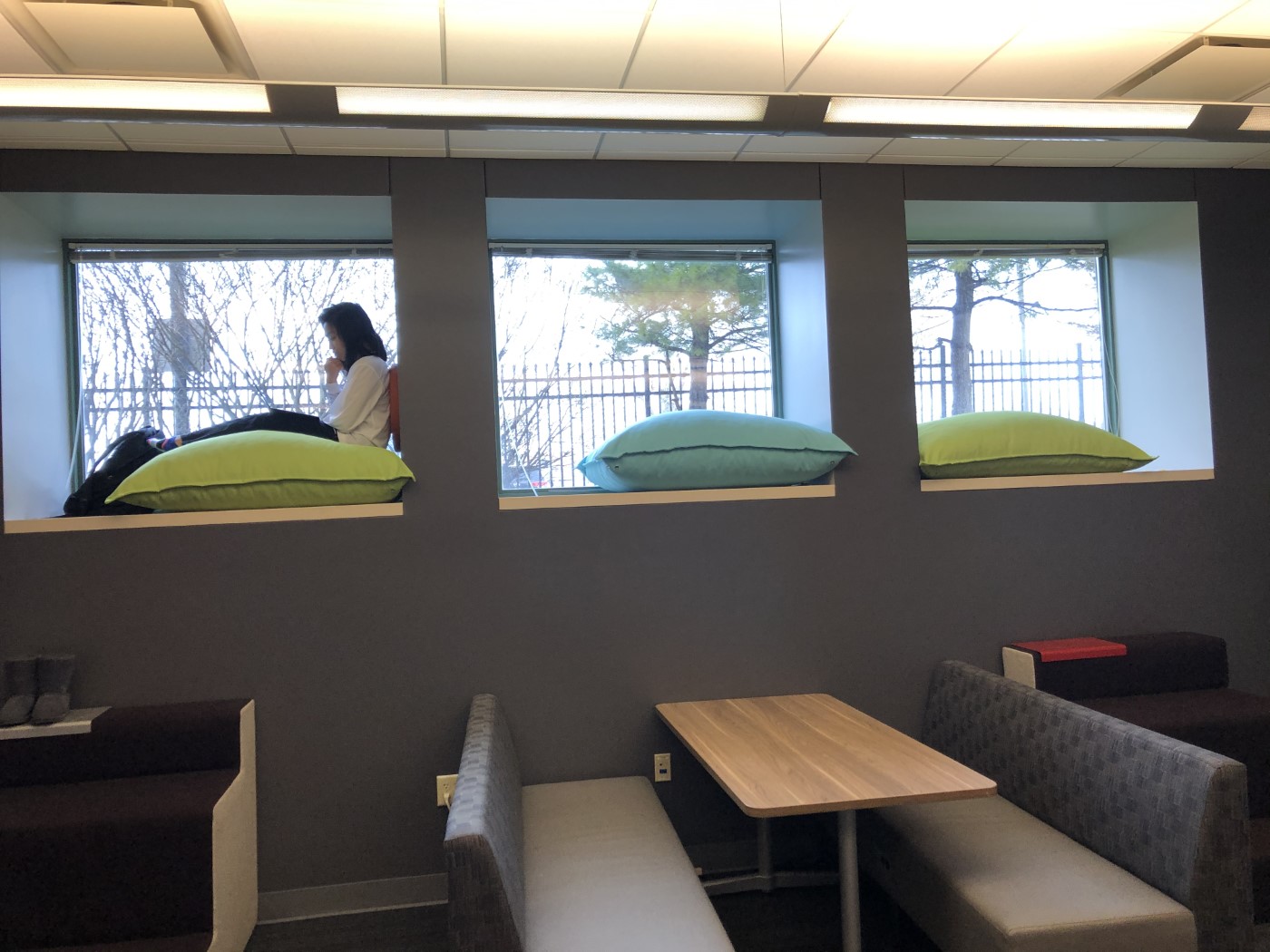
Perhaps the most fundamental role educators play in heutagogical education is designing the learning environment itself. This means creating physical spaces that enable choice, flexibility, and exploration. It means gathering resources and making them accessible so individuals can access what they need independently. It means establishing routines and structures that scaffold growing autonomy.
This design work is invisible to learners in the moment, but it’s everything. A well-designed heutagogical environment doesn’t happen by accident. It requires facilitators to anticipate learner needs, understand developmental progressions, and intentionally create conditions where self-direction can flourish.
It does not require facilitators/adults to make assumptions based on required teaching expectations, the perception of instructional objectives, or the authoritarian ‘I know best’ methodology.
It does require various departments such as construction, design, curriculum, intervention, family coordinators etc. to work together within the overall design and implementation process – in order to ensure an environment that’s evidence-based, community-facing, and long-lasting.
Teachers can ask themselves questions like: What zones does this space need to support different learning modes? How can I organize resources so individuals can access them without my intervention? What routines will help learners make productive choices? What boundaries are non-negotiable, and where can I offer genuine autonomy?
Administrators can ask themselves questions like: What zones can we highlight best practices during staff development? What methods of access can we discuss for different grade levels? What community-wide routines can we establish to promote educator and learner choice?
These design decisions shape whether individuals experience meaningful agency or simply flounder without guidance.
The Teacher as Metacognitive Coach
One of the most critical insights about heutagogy is this: self-direction isn’t innate. It’s learned. And that means someone needs to teach it.
This is where teachers become metacognitive coaches:
- They explicitly teach students how to learn—how to set goals, monitor their own understanding, recognize when they’re stuck, select appropriate strategies, and reflect on their progress. These executive function skills are the foundation of genuine self-determination.
The Teacher as Guide and Resource
Just because learners have agency doesn’t mean they have all the answers. Educators in heutagogical settings serve as expert guides who help individuals navigate complexity, identify quality resources, and make connections they might not see independently.
This is where teachers become Guides and Resources:
- When a learner is pursuing an inquiry question, the educator might suggest a resource they hadn’t considered or point out a connection to previous learning. When an individual is stuck, the educator asks questions that help the learner diagnose the problem rather than simply providing the solution. When the learning community is ready to go deeper, the educator knows what the next challenge should be.
The difference is that this guidance is responsive to student direction rather than predetermined and delivered to everyone on the same schedule.
The Teacher as Cultivator of Culture
Heutagogical learning requires a particular kind of classroom culture—one where mistakes are learning opportunities, where individuals trust themselves and each other, where curiosity is valued over compliance, and where the process of learning is just as important as the product.
This is where teachers become Cultivators of Culture:
- Educators cultivate this culture through their daily words and actions. They normalize struggle by sharing their own challenges and failures. They celebrate when learners try something difficult, regardless of the outcome. They facilitate peer feedback that’s constructive rather than critical. They model reflection and metacognition as ongoing practices, not just end-of-unit activities.
Educators set the tone that makes heutagogical learning possible—or impossible.
The Teacher as System Co-Builders
In traditional classrooms, the teacher manages everything—who works with whom, when transitions happen, how materials are distributed, who speaks when. It’s exhausting and creates dependence.
This is where teachers become System Co-Builders:
- Heutagogical teachers co-build systems that enable autonomy. They discuss processes with the learning community – introducing umbrella concepts which get digested and actualized within the community as a whole. They co-create structures for reflection and feedback so individuals don’t always need teacher input to improve their work. They co-establish protocols for group formation so learners can self-organize for collaborative work. They co-design portfolio systems where individuals track their own progress over time. They co-create resource management systems where the community maintains classroom materials.
These systems don’t run themselves initially. Educators invest significant time modeling forthe community how to implement and use these structures, troubleshooting when they break down, and refining them based on how well they’re working. But once established, these systems distribute responsibility and free the educator to focus on high-leverage interactions rather than classroom management minutiae.
The Paradox: We Need More Skill, Less Red Tape
Here’s the paradox at the heart of heutagogical spaces: they require more pedagogical sophistication while demanding less direct control.
Architects, designers, distribution networks, business administrators etc… need deeper educational understanding to create educational environments which corral learners through diverse pathways. They need stronger communication management skills to maintain productive environments while offering flexibility. They need better assessment capabilities to understand learning without traditional metrics. They need more refined interpersonal skills to ask questions and support without directing – and they can achieve greater understanding by including instructional staff and administration within major capital project decision making.